
A business can have a good product and still fail because the problem is somewhere else. If you keep improving the product while potential buyers cannot find you, do not trust you, or do not care enough to act, more features will not change the outcome.
The hard part is that these problems can look similar from inside the business. Sales are slow, feedback is thin, and every possible fix can feel urgent.
The first step is to identify which part of the path to payment has broken down.
Business failure often starts with the wrong diagnosis
Many founders assume a lack of traction means the product is weak. Sometimes that is true. However, a business can also stall when one of three areas is broken: distribution, sales, or the offer.
Distribution asks whether the right people can find the business. Sales asks whether those people trust the business enough to buy. The offer asks whether the problem feels painful enough for them to care now.
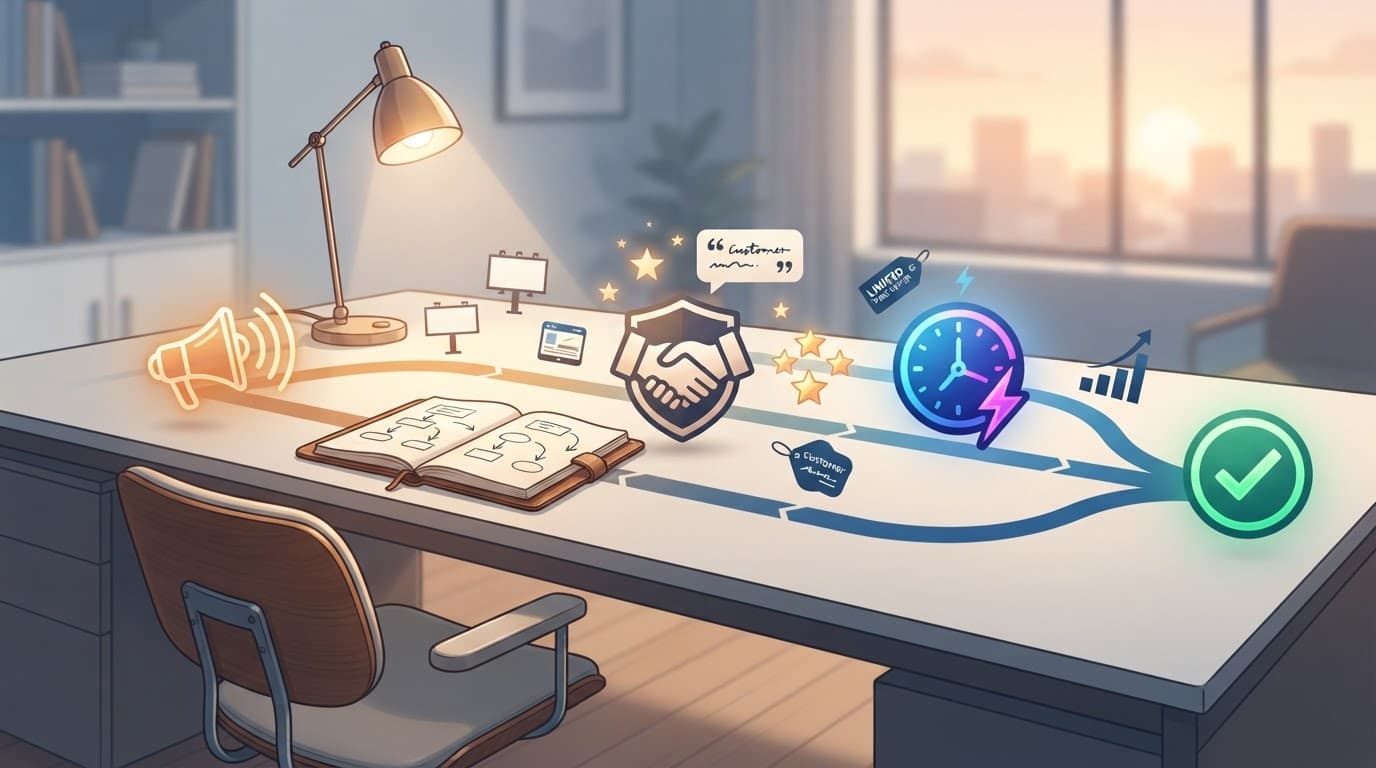
When founders confuse these issues, they can spend months fixing the wrong thing. A company might rewrite its website when it needs better visibility. It might add product features when buyers already understand the product but do not feel a reason to switch.
Let buyer behavior point to the problem
Watch what happens as people move toward a purchase. Their behavior offers a simple diagnosis:- People do not see you: Distribution may be broken.
- People listen but do not buy: Sales may be broken.
- People understand but still do not care: The offer may be broken.
A slow business does not always need a better product. It needs an honest answer about where buyers stop.
Distribution: Can you reach the right people?
Distribution comes down to a direct question: Can you get in front of the right people?
A strong product cannot help someone who never encounters it. Before a potential buyer can judge your message, consider your price, or compare alternatives, they need to know your business exists.
Visibility alone is not enough, though. Getting attention from people who have no use for what you sell will not create a business. Distribution works when the people who are most likely to have the problem can find you.
The clearest sign of a distribution problem
If people do not see you, distribution is broken. They may never reach the point where they can understand what you do or decide whether it matters to them.
That distinction matters because founders often respond to low awareness by changing the offer. Yet an unseen offer cannot prove whether it is persuasive or valuable. First, it has to reach people who could realistically use it.
Questions that reveal a visibility gap
Before changing your product or message, ask whether the right audience is actually encountering the business:
- Are the people who may need this offer seeing it?
- Can potential buyers find the business when they are dealing with the problem?
- Are buyers aware that a solution like yours exists?
The U.S. Small Business Administration describes market research as a way to find customers and improve a business idea. That work starts with knowing who the buyer is and whether you can reach them.
Sales: Can you earn enough trust for a yes?
Attention is only the beginning. A person can listen to your pitch, understand what you sell, and still decide not to buy.
Sales is the part of the business that answers another direct question: Can you make people trust you enough to say yes? The buyer has to believe the business understands the problem and can deliver what it promises.
Listening without buying points to sales
If people listen but do not buy, sales is broken. This does not automatically mean the product has failed. It means the path from interest to payment has not become convincing enough.
A buyer may hear the message but remain uncertain. They might not trust the business yet. They may not feel confident that the offer will work for their situation. Whatever the reason, attention has not turned into action.
Keep the three problems separate
Low sales can tempt you to change everything at once. That makes it harder to learn what actually needs work.
| What buyers do | Area to examine |
|---|---|
| They do not encounter the business | Distribution |
| They hear the message but do not purchase | Sales |
| They understand the offer but feel no need to act | The offer |
The takeaway is simple: a lack of purchases can begin at different points. Diagnose the buyer's stopping point before rebuilding the product, changing the message, or assuming there is no demand.
The offer: Is the problem painful enough now?
An offer must give people a reason to act. Buyers may understand the product perfectly and still decide that they can live without it.
The key question is: Is the problem painful enough for them to care now? A problem can be real without being urgent. Someone may agree that your product is useful, then continue using their current workaround because changing feels unnecessary.
Understanding value is different from caring
If people understand but still do not care, the offer is broken. The issue is not always a confusing explanation. Sometimes the explanation is clear, but the problem does not matter enough to justify payment.
This is where founders can get distracted by feature requests or presentation details. More features do not automatically make the buyer's problem more pressing. The offer has to connect to something the buyer wants resolved now.
Where the buyer's decision can stop
The journey to a purchase follows a basic sequence:
- A person sees the business.
- They listen to the message.
- They understand the offer.
- They decide whether the problem matters enough to pay for a solution.
The final step is easy to overlook because it comes after awareness and understanding. Still, a clear message does not create urgency by itself. The buyer has to see enough value in changing their current situation.
A business exists when value leads to payment
A business is built when a stranger sees value and chooses to pay. Until that happens, the founder is still testing whether all parts of the path work together.
Distribution gets the right person's attention. Sales gives that person enough confidence to say yes. The offer gives them a reason to care at this moment rather than someday later.
Someone noticing your business is not the same as someone choosing to pay for it.
This view keeps the focus on the complete customer path. You cannot judge sales when the right people have not seen the business. You also cannot judge the offer only by whether people say it sounds interesting. Payment is the point where awareness, trust, and urgency meet.
Stop spending time on the wrong fix
Founders often put more time into the product because it feels concrete. You can add a feature, redesign a screen, or refine a process. However, those changes may have little effect if the real issue is that buyers cannot find you, do not trust you, or do not care enough to switch.
Start with a diagnosis instead of a broad round of changes. Look at what potential buyers actually do after they encounter the business.
Match the response to what is happening
When people are not seeing you, examine distribution. When they are hearing you but not purchasing, examine sales and trust. When they understand your offer but remain indifferent, examine whether the problem feels important enough now.
That discipline prevents random changes from becoming a substitute for learning. It also keeps you from treating every weak result as proof that the product itself is the problem.
A small-business market research guide can help frame the basic questions about target customers, their needs, and the alternatives they use. The goal is not to collect opinions that make the idea sound good. The goal is to find out what is true.
Talk to real buyers before you build more
The most useful answers come from people who might actually buy. Talk to real buyers before you spend another year improving an assumption.
These conversations should help you understand the buyer's current situation. Ask about what they already use, what frustrates them, and what would cause them to change. Then give them room to answer in their own words.
Ask questions that uncover the current reality
Use direct questions that keep the focus on the buyer rather than your idea:
- What do you use now?
- What annoys you about it?
- What would make you switch?
The first question shows how the buyer currently handles the problem. The second reveals the frustrations they already feel. The third can show what would need to change before they would consider another option.
Do not rush to explain how your product solves each complaint. A buyer conversation loses value when it turns into a pitch.
Listen instead of defending the idea
"Ask, then shut up and listen" is a useful rule because founders naturally want to persuade. Yet persuasion can hide the information you need most.
Let buyers describe their current tools, habits, frustrations, and reasons for staying put. Listen for whether they can find the business, whether they trust it, and whether the problem is strong enough to create action.
The goal is to hear the buyer, not to defend the idea.
A failed idea is not a failed founder
Sometimes real buyer conversations reveal that the idea will not become a business. That answer can be disappointing, but it is better than spending more time solving the wrong problem.
You did not lose a business when you discover that buyers will not move forward. You escaped an idea that was never going to become one.
Find the broken part before you build again
A product does not need to be bad for a business to struggle. The obstacle may be distribution, sales, or the offer.
Watch where buyers stop, then focus your attention there. Real conversations with real buyers can show whether people cannot see you, cannot trust you, or simply do not care enough to pay.


1.png)


0 facebook:
Post a Comment